
Illinois’ natural beauty: Brought to you by AFSCME members in IDNR

Last year, Illinois’ state parks smashed attendance records. The state’s dozens of state parks and historic areas saw 41 million visitors in 2025 and there’s no sign things will slow down this year.
Behind those millions of visits, AFSCME members in the Illinois Department of Natural Resources work tirelessly to make sure these state treasures are in pristine condition.
Getting ready for the rush means spring is one of the busiest times for state park workers.
It’s hard work, but they do it with pride—because there’s no better payoff than seeing millions of people enjoying Illinois’ natural beauty.
The spring rush in Randolph County
Matt Rudick, a member of AFSCME Local 1805 and a site technician at the Randolph County State Recreational Area knows the park like the back of his hand.
He lives just down the road, and he’s had a strong bond with the park for most of his life. He grew up going there with his grandma and remembers fondly the relaxing summer days they spent fishing there together.
“It’s a great feeling to see families enjoying the park—it’s part of why I came here to work,” Rudick said. “It’s the feeling you’ve done something positive for someone else.”
DNR employees at Randolph County are never wanting for tasks to complete.
The winter months are all about preparing for the visitors that spring brings. Rudick and his colleagues repair their tools and equipment, rebuild park amenities like picnic benches and cut down dead trees.
The spring rains bring endless mowing that won’t let up until the fall. There are urgent repairs to be done to the park’s miles of hiking trails, electrical repairs to be done at campsites, native plant seeds to be planted, and so much more.
“Every day, we’re doing something new to make the park better and safer for the people who are coming to visit it,” Rudick said.
Making Sangchris Lake a destination
The 6,000-acre Sangchris Lake State Park sits just 20 minutes southeast of Springfield. The park is truly massive—and its size is only matched by its popularity.
The lake itself offers 120 miles of shoreline to fish and swim. Workers keep the lake stocked with bass, bluegill and catfish, making it a popular destination for anglers.
Illinois is also one of the best states in the country for deer hunting. The state’s excellent conservation practices and copious food mean that deer are bigger and more abundant than in most other Midwest states.
“People come to our park from out of state to bag one of our big Illinois deer,” said Tom McCloskey, a site technician and member of AFSCME Local 1019.
But bagging deer and catching fish aren’t the only reasons people visit Sangchris Lake.
The park is home to two large campgrounds that bring families and nature enjoyers from all around. Both are completely full every single weekend.
The park’s size and popularity means there’s a lot to do in the spring.
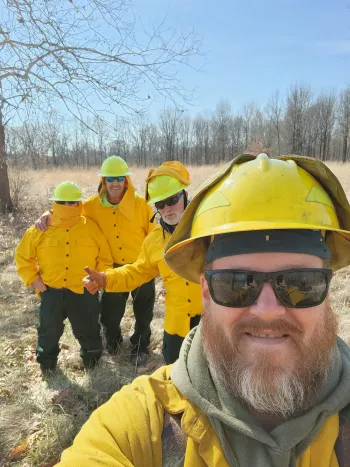
The grasslands throughout the park all need controlled burns at regular intervals to promote the rejuvenation of native plants and trees. Each spring, they burn different areas of the park to let it grow back stronger.
McCloskey loves the outdoors, so this work is a perfect fit for him. But he also loves meeting the wide range of characters who come to enjoy Illinois’ natural beauty from as far as Europe.
“We get everyone from country people to French airline pilots coming through the campground,” he said. “It’s great to see the wide variety of people coming to visit us.”
The third generation keeps Dixon Springs going
Dixon Springs State Park is the state’s southernmost park, sitting just a few miles from the Ohio River which marks Illinois’ border with Kentucky. The park may not be the biggest, but it’s beloved by its visitors.
Bennett Hughes, a DNR site technician and member of AFSCME Local 1048, is the third generation of his family to work at Dixon Springs. His grandfather and father both worked at the park, so it felt like a second home when he was growing up.
Even though the park is peaceful, work can still be stressful. It’s one of the only parks with a swimming pool, which comes with a lot of extra maintenance. And the park’s 800 acres would take one person a full week to mow.
“For as small as our park is, we have a lot going on,” Hughes said.
The challenges are complicated by the fact that Dixon Springs is currently short-staffed, which means Hughes and his co-workers have to work even harder during the spring rush just to keep up with the myriad tasks.
All their hard work pays off in the end.
“Right now, I’m beat down and dead tired, but when I see the kids coming in and spending time in nature and enjoying it, that’s the whole point of why we do it,” Hughes said. “When you see the smiles on their faces, that makes it all worth it.”